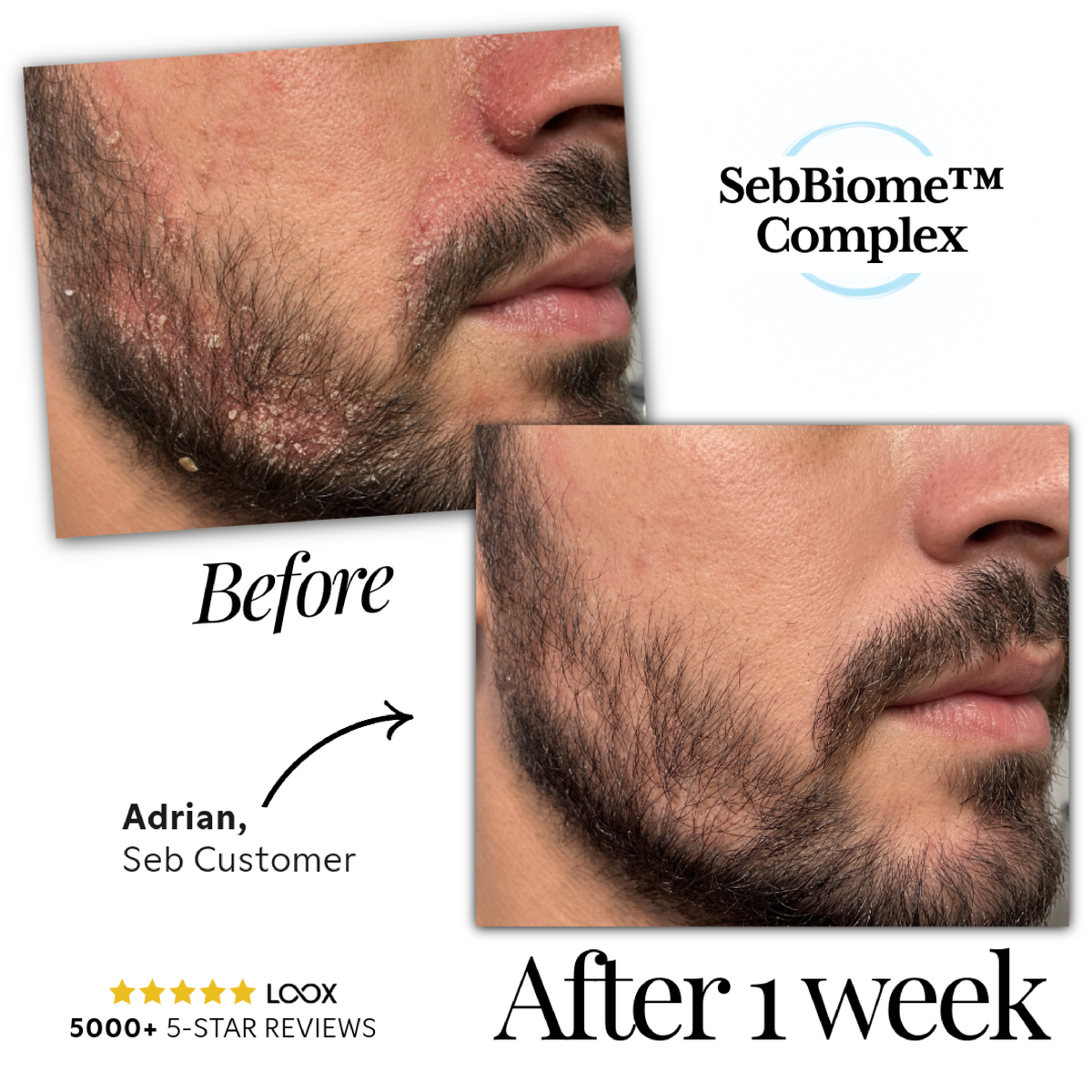
The Microbiome Approach — Treating the Scalp as an Ecosystem, Not a Problem Area
Modern scalp care is shifting away from harsh removal and toward microbiome balance. In conditions like Seborrheic Dermatitis, the issue is not simply “too much yeast,” but how the entire microbial environment behaves.
Why “Stripping Everything” Backfires
Many traditional treatments focus on eliminating oil and microbes aggressively. While this can reduce flaking short-term, it often leads to:
- Increased dryness and irritation
- Rebound oil production
- Higher sensitivity to normal microbial activity
When the scalp is over-cleansed, it becomes unstable — and instability is what drives recurrence.
The Modern Microbiome Strategy
Instead of trying to sterilise the scalp, the goal is to guide it toward balance.
Step 1: Reduce Overactive Yeast (Without Sterilisation)
Use targeted antifungal actives:
- Ketoconazole shampoos (2–3x weekly during flare periods)
- Piroctone olamine formulas for gentler long-term control
- Selenium sulfide treatments when scaling is more persistent
These reduce excess Malassezia activity without eliminating all microbial life.
Step 2: Support Skin Diversity
After treatment washes, introduce products that help the scalp recover:
- Prebiotic scalp tonics
- Soothing hydrating serums with glycerin or beta-glucan
- Barrier-supporting leave-on treatments
This encourages a more stable microbial environment rather than repeated boom-bust cycles.
Step 3: Avoid “Microbiome Shock”
One of the most overlooked triggers is rapid product rotation. Constantly switching shampoos, oils, and actives can destabilise the scalp’s adaptation process.
Instead, aim for:
- One treatment shampoo
- One gentle cleanser
- One supportive leave-on product
Consistency is more effective than complexity.
What Improvement Actually Looks Like
A balanced microbiome approach does not always produce instant clearing. Instead, users typically notice:
- Fewer severe flare-ups
- Reduced itch intensity
- Longer periods of stability between episodes
This slower trajectory is often more sustainable than aggressive treatment cycles.