Seborrheic Dermatitis on the Ears and Behind the Ears: Care Tips
Seborrheic dermatitis is a common chronic skin condition, but when it affects the ears and the area behind the ears, it can be especially uncomfortable and frustrating. These areas are often overlooked in daily skincare routines, yet they are rich in oil glands—making them a frequent target for flare-ups.
Flaking, redness, itching, and greasy scales around or behind the ears can interfere with comfort, appearance, and even hearing aids or glasses. Understanding why seborrheic dermatitis affects this area and how to care for it properly can make a significant difference in managing symptoms.
This blog explores the causes, symptoms, and practical care tips for seborrheic dermatitis affecting the ears and the skin behind them.
What Is Seborrheic Dermatitis?
Seborrheic dermatitis is a long-term inflammatory skin condition that commonly appears in oily areas of the body, such as the scalp, face, chest, and ears. It is associated with overactive sebaceous (oil) glands and an inflammatory response to Malassezia yeast, a microorganism naturally present on the skin.
While it is not contagious or dangerous, seborrheic dermatitis can be persistent and recurrent, often flaring during times of stress, illness, or seasonal changes.
Why Does Seborrheic Dermatitis Affect the Ears?
The ears—especially the folds, creases, and the area behind them—are prone to seborrheic dermatitis for several reasons:
-High concentration of oil glands
-Warm, moist environment, especially behind the ears
-Skin folds that trap sweat and oil
-Limited airflow, particularly for people with long hair, hats, glasses, or hearing devices
Because the skin here is thinner and more sensitive, symptoms can feel more intense compared to other areas.
Common Symptoms Around and Behind the Ears
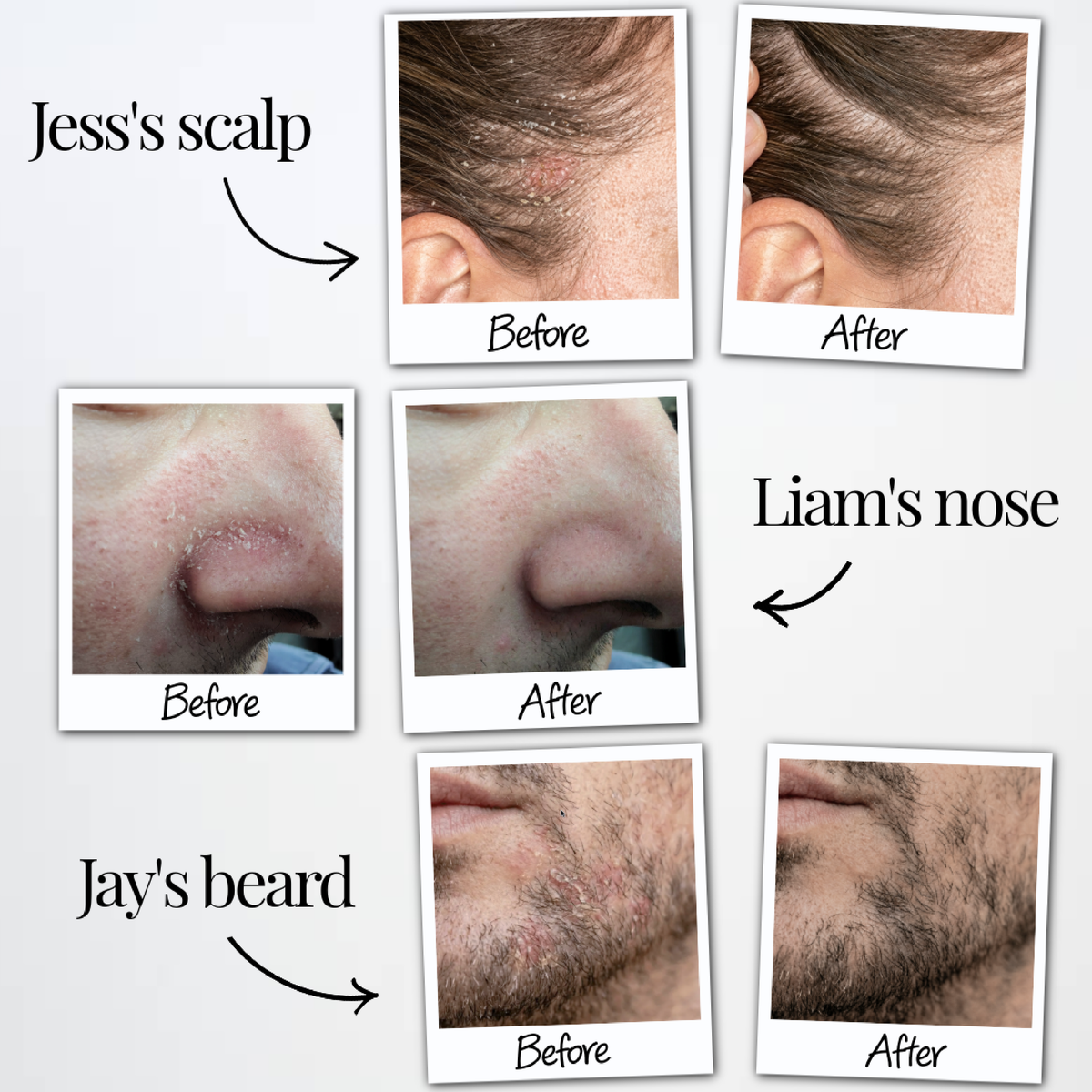
Seborrheic dermatitis in this area may present as:
-Red or pink patches of skin
-Greasy, yellow, or white flakes
-Itching or mild burning sensation
-Cracked or scaly skin behind the ears
-Flaking inside the outer ear (not deep in the ear canal)
In some cases, the skin may become irritated enough to crack, which can increase the risk of secondary infection if not properly cared for.
Seborrheic Dermatitis vs. Other Ear Skin Conditions
Seborrheic dermatitis can be mistaken for other conditions, including:
-Eczema: Usually drier, itchier, and less greasy
-Psoriasis: Thicker, silvery scales with more defined edges
-Contact dermatitis: Triggered by products like earrings, headphones, or hair products
If symptoms are severe, painful, or spreading, a healthcare provider should evaluate the area to confirm the diagnosis.
Daily Care Tips for Managing Seborrheic Dermatitis on the Ears
Consistent, gentle care is key to managing symptoms and preventing flare-ups.
1. Clean Gently but Regularly
Wash the ears and surrounding skin daily with:
-A mild, fragrance-free cleanser
-Lukewarm water (avoid hot water)
Be sure to rinse thoroughly and pat dry, especially behind the ears, where moisture can worsen symptoms.
2. Keep the Area Dry
Moisture trapped behind the ears can trigger flare-ups. After bathing:
-Dry carefully with a clean towel
-Pay attention to skin folds
-Avoid leaving hair wet against the ears
3. Avoid Harsh Products
Hair sprays, gels, shampoos, and perfumes can irritate the ears and surrounding skin. Choose:
-Gentle, hypoallergenic hair and skincare products
-Fragrance-free formulas whenever possible
4. Moisturise Wisely
Using the right moisturiser can help restore the skin barrier:
-Choose light, non-greasy moisturisers
-Avoid thick occlusive products unless recommended by a doctor
-Apply only to clean, dry skin
Seborrheic dermatitis is a manageable condition, even though it may come and go over time. With consistent care, trigger awareness, and appropriate treatment, most people can keep symptoms under control and prevent frequent flare-ups.
Patience is important—improvement often happens gradually rather than overnight.
The Takeaway
Seborrheic dermatitis on and behind the ears may be uncomfortable, but it is common, non-contagious, and treatable. Paying attention to gentle cleansing, moisture control, and lifestyle factors can significantly reduce symptoms and improve skin health.
Understanding your skin’s needs and responding early to flare-ups can help you stay comfortable and confident—no matter where seborrheic dermatitis appears.