Seborrheic Dermatitis in People With Oily Skin vs Dry Skin
Seborrheic dermatitis is one of the most common chronic inflammatory skin conditions — yet it behaves very differently depending on your skin type. If you’ve ever wondered why your flakes look greasy while someone else’s look powdery and tight, your skin type may be the reason.
This blog explores how seborrheic dermatitis presents in oily versus dry skin, why the differences happen, and how treatment approaches should vary.
Seborrheic dermatitis is a chronic inflammatory condition that mainly affects areas rich in sebaceous (oil) glands:
-Scalp
-Eyebrows
-Around the nose
-Behind the ears
-Beard area
-Chest
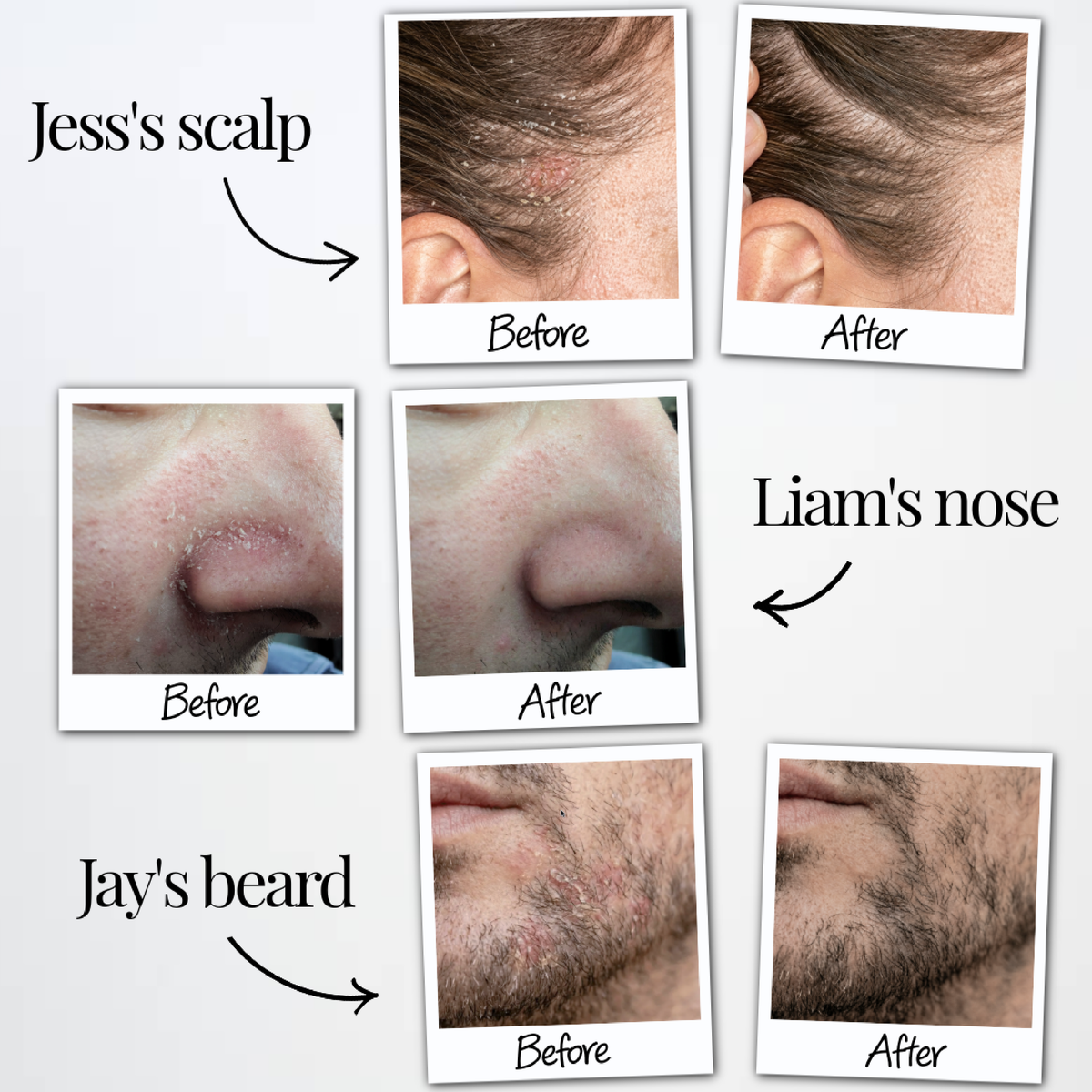
It’s strongly associated with an overgrowth of Malassezia yeast, a naturally occurring microorganism that feeds on skin oils. When combined with inflammation and a disrupted skin barrier, this leads to redness, flaking, itching, and scaling.
While the root cause is similar in most people, the appearance and severity differ dramatically between oily and dry skin types.
Seborrheic Dermatitis in Oily Skin
Why It’s More Common
Seborrheic dermatitis is typically more common and more persistent in people with oily skin. The reason is simple: more oil = more food for Malassezia yeast.
Excess sebum:
-Fuels yeast overgrowth
-Increases inflammation
-Creates thick, greasy scale buildup
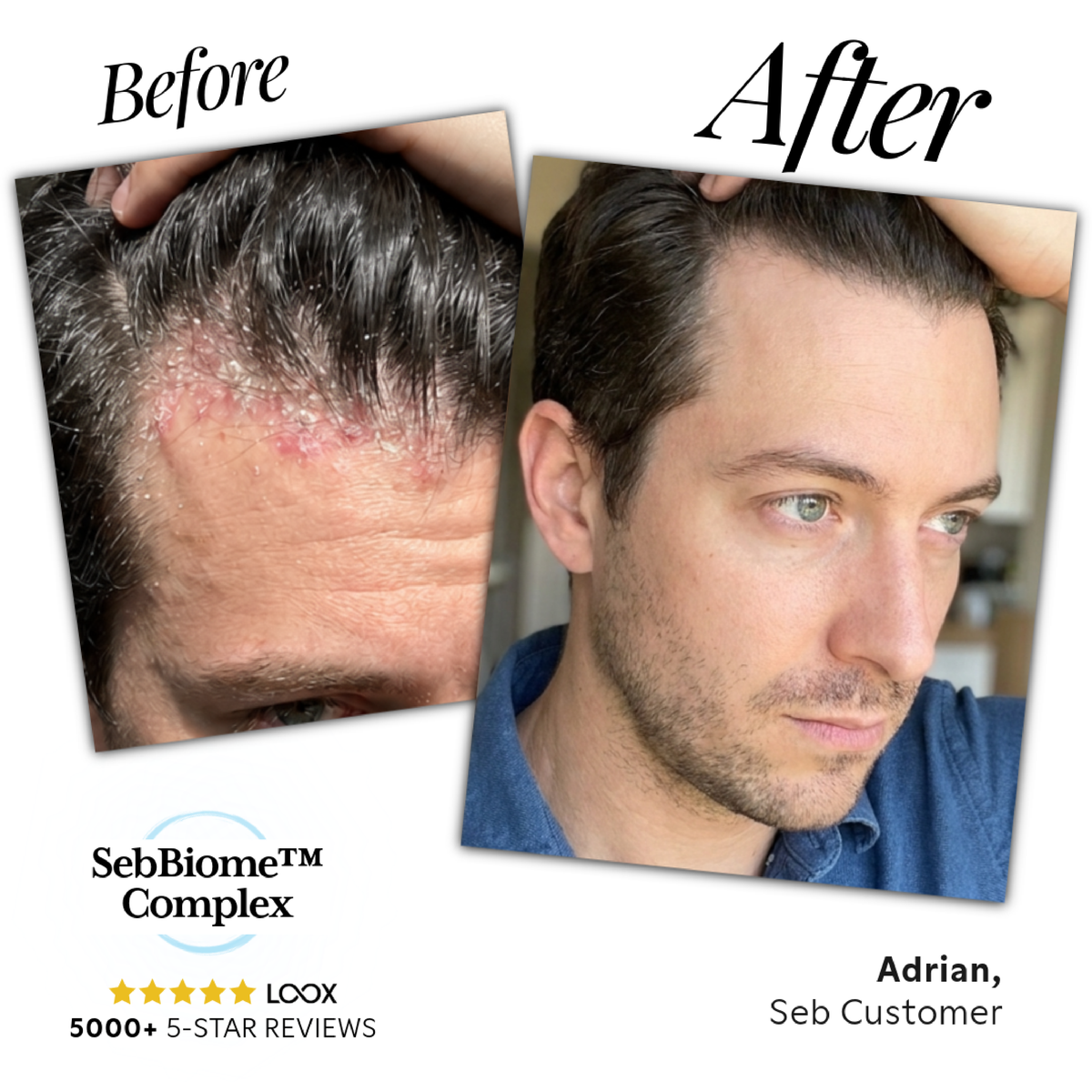
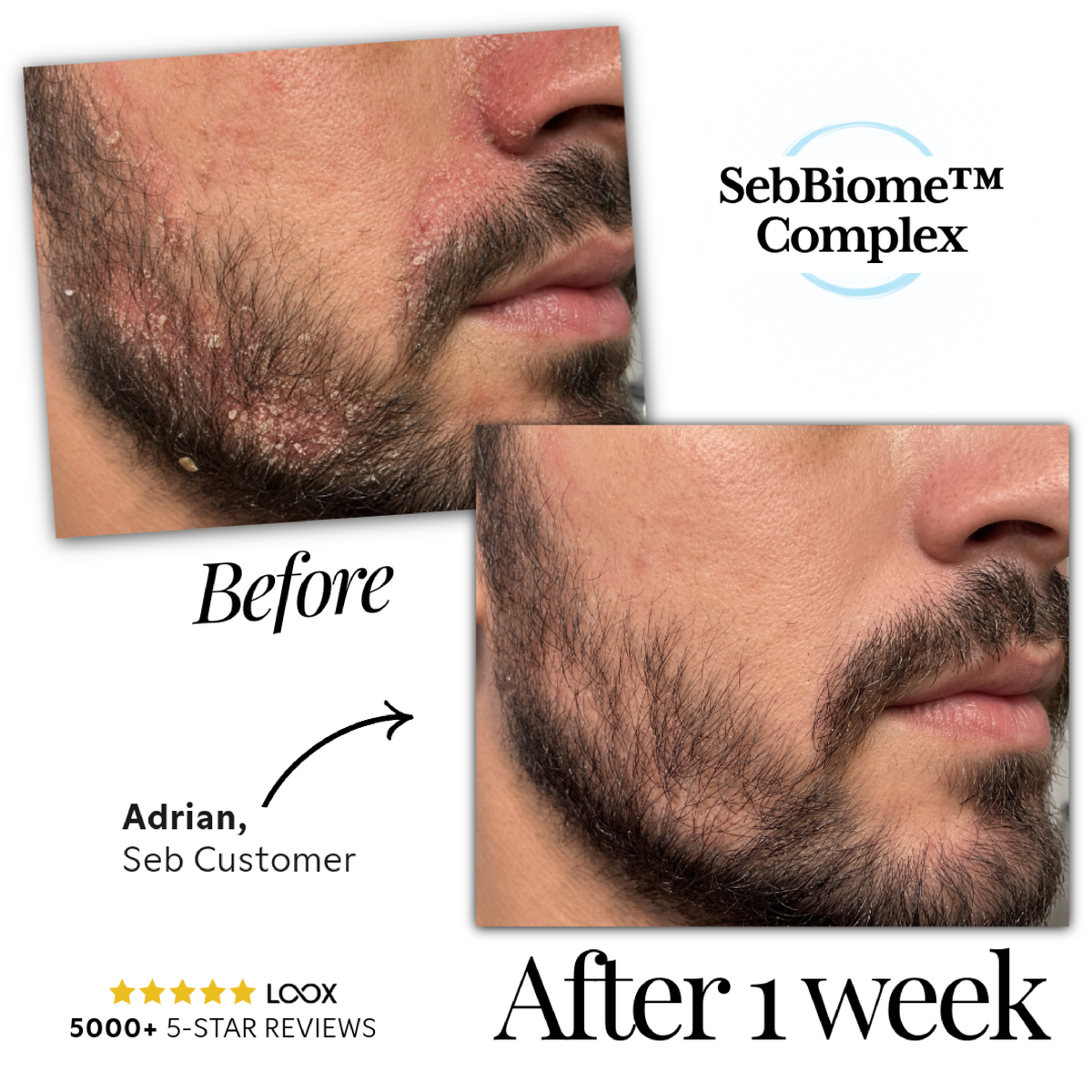
In oily skin, seborrheic dermatitis typically presents as:
-Thick, yellow or white greasy flakes
-Oily scalp buildup
-Red patches under scales
-Persistent dandruff that quickly returns
-Itchy, inflamed areas
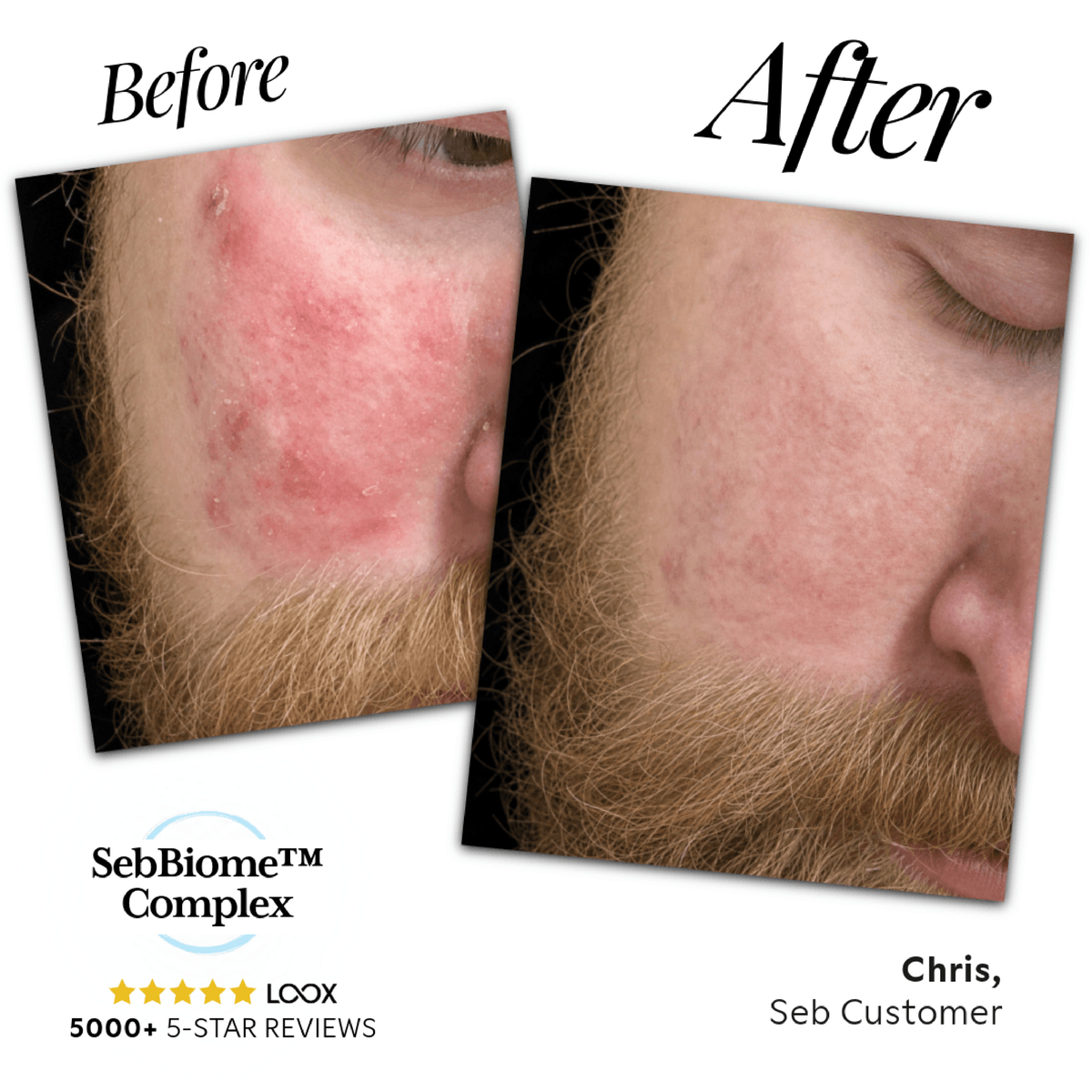
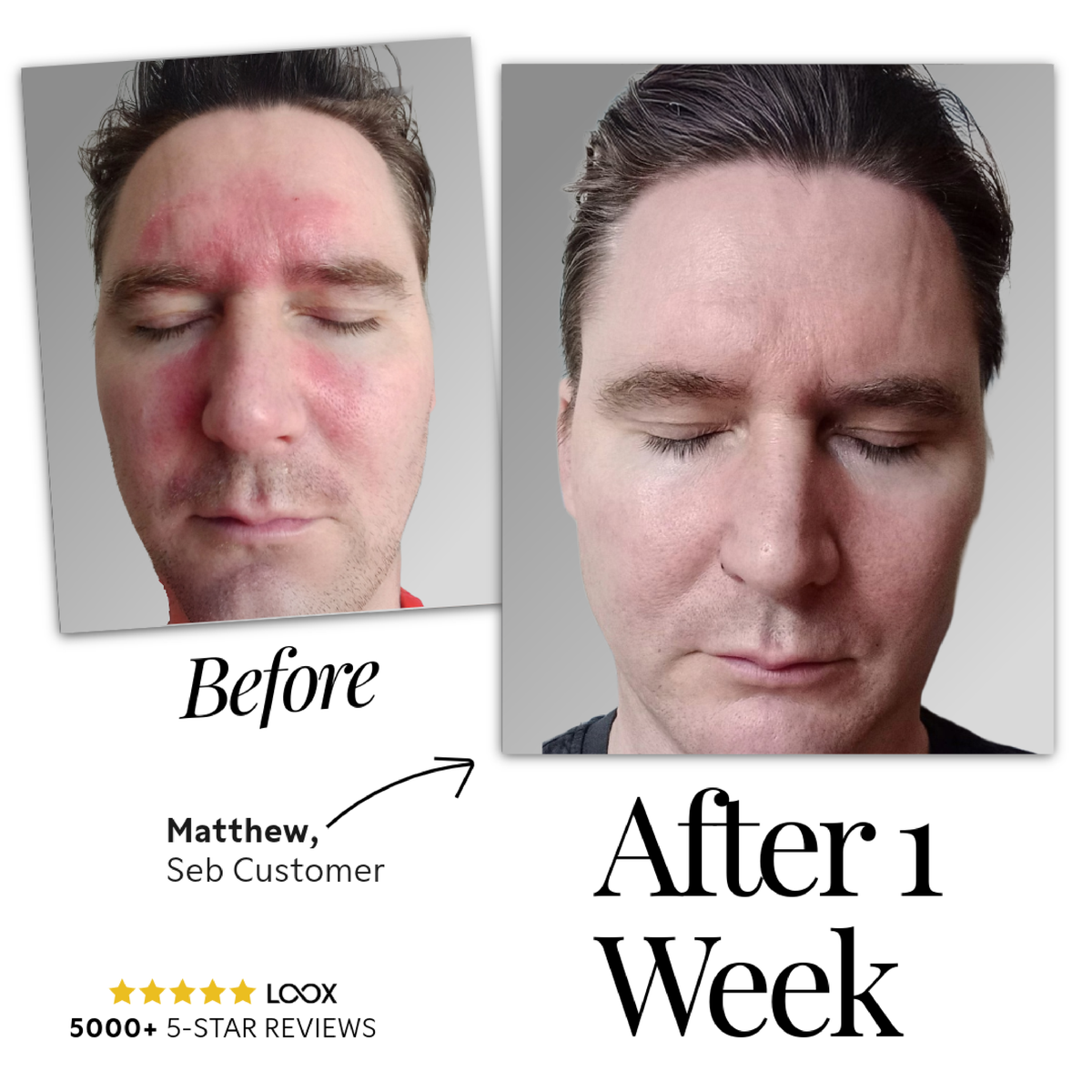
On the face, you might see:
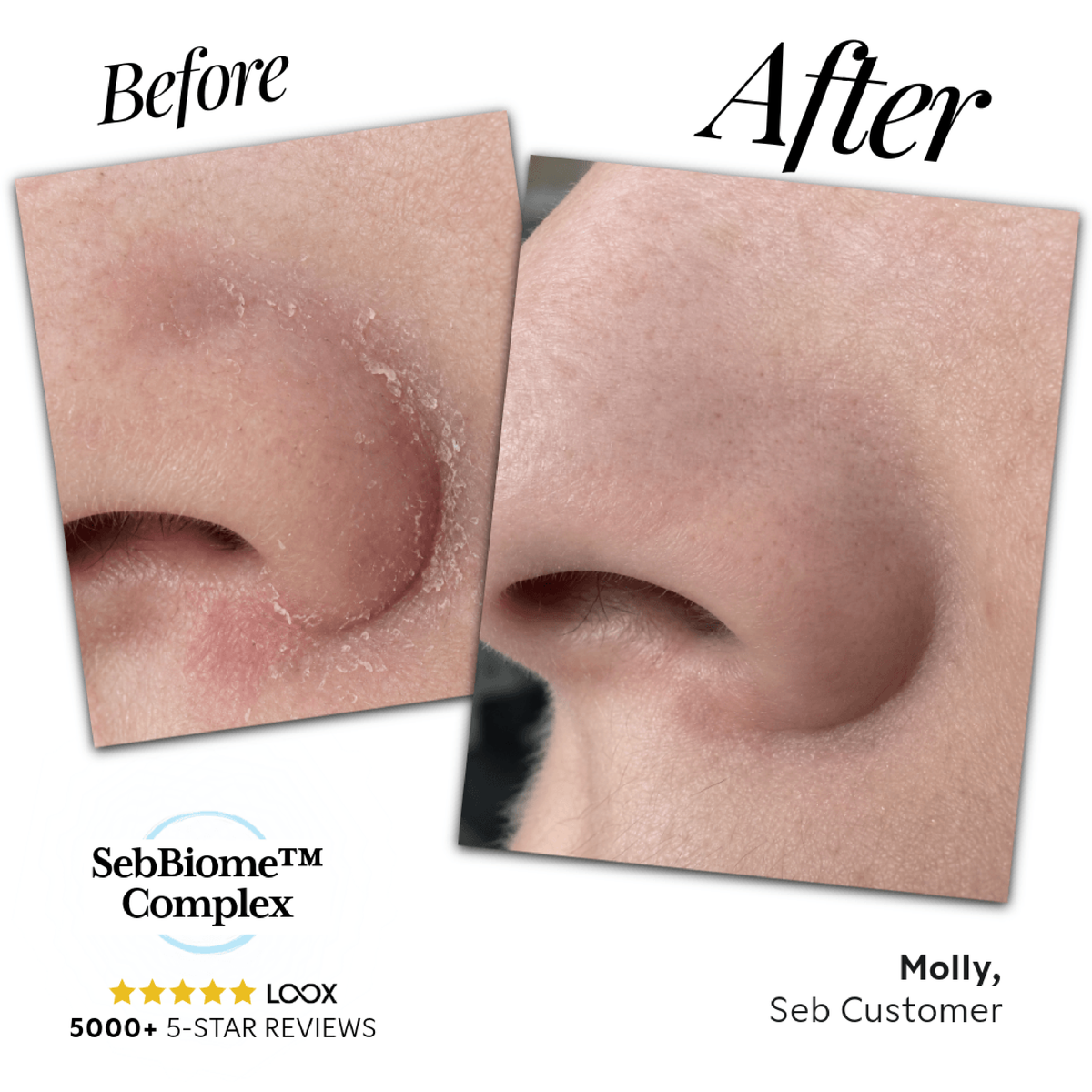
-Redness around the nose
-Shiny skin with flaking
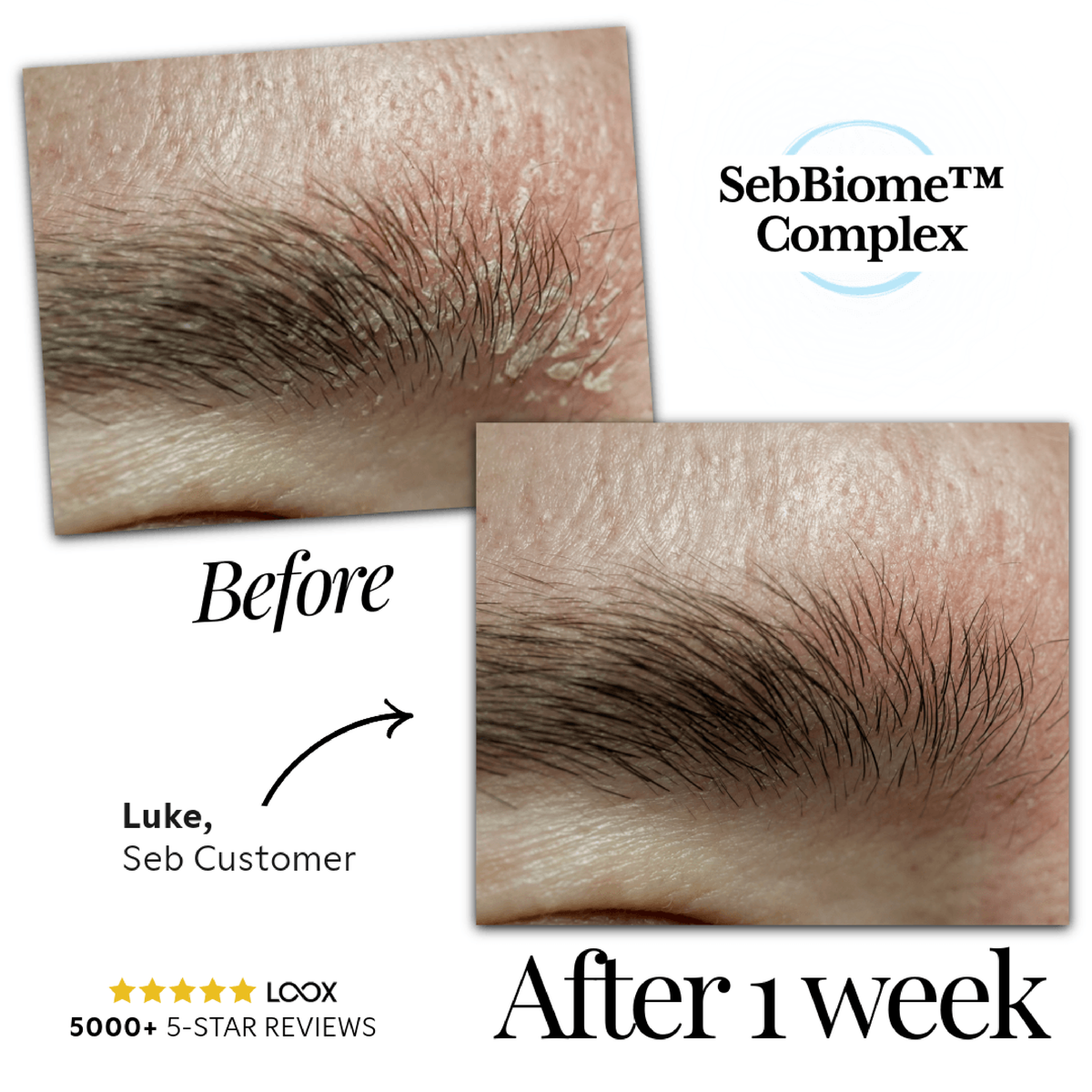
-Greasy scales in eyebrows
Common Challenges
-Flakes clump together
-Hair may feel greasy even after washing
-Frequent flare-ups
-Harder to control long term
Treatment Focus for Oily Skin
The goal is to control oil and yeast simultaneously.
Recommended approach:
-Antifungal shampoos (ketoconazole, zinc pyrithione, selenium sulfide)
-Lightweight, oil-free moisturisers
-Gentle exfoliation (salicylic acid in low concentration)
-Avoid heavy oils and thick creams
Over-washing, however, can trigger rebound oil production — so balance is key.
Seborrheic Dermatitis in Dry Skin
Why It Feels Different
People with dry skin also get seborrheic dermatitis, but the mechanism shifts slightly. Instead of excess oil driving yeast growth, the problem becomes:
-Compromised skin barrier
-Increased sensitivity
-Inflammation from dryness
The yeast is still involved — but the lack of moisture worsens irritation.
In dry skin, seborrheic dermatitis often presents as:
-Fine, powdery white flakes
-Tight, itchy scalp
-Red, irritated patches
-Increased sensitivity to products
-Burning sensation
Unlike oily skin, flakes are lighter and not greasy.
Common Challenges
-Moisturisers may sting
-Antifungal shampoos may worsen dryness
-Skin feels tight after washing
-More discomfort than visible oil
Treatment Focus for Dry Skin
Here, the goal shifts to barrier repair + gentle antifungal support.
Recommended approach:
-Sulfate-free gentle cleansers
-Cream-based antifungal treatments
-Ceramide-rich moisturisers
-Avoid alcohol-based products
-Limit harsh exfoliation
Hydration is critical — but heavy occlusive oils can still feed yeast, so ingredient choice matters.
Key Differences: Oily vs Dry Skin
| Feature | Oily Skin | Dry Skin |
|---|---|---|
| Flake Type | Thick, greasy | Fine, powdery |
| Oil Production | High | Low |
| Sensation | Itchy, heavy | Tight, burning |
| Scale Color | Yellowish | White |
| Treatment Focus | Oil control | Barrier repair |
Why Misdiagnosis Happens
Seborrheic dermatitis in dry skin is sometimes mistaken for:
-Simple dry scalp
-Eczema
-Contact dermatitis
Meanwhile, in oily skin it can resemble:
-Psoriasis
-Severe dandruff
Because treatments differ, using the wrong approach can worsen symptoms.
Can Skin Type Change the Severity?
Yes.
-Oily skin often experiences more visible scaling.
-Dry skin often experiences more discomfort and sensitivity.
Hormonal changes, weather, stress, and skincare routines can shift your skin type temporarily — which may explain why flare-ups seem unpredictable.
Lifestyle Factors That Affect Both Types
Regardless of skin type, seborrheic dermatitis flares can be triggered by:
-Stress
-Cold weather
-Hormonal shifts
-Harsh skincare products
-Infrequent or overly frequent washing
Managing triggers is just as important as topical treatment.
When to See a Dermatologist
Consult a professional if:
-Flakes are thick and widespread
-Over-the-counter treatments don’t help after 2–4 weeks
-You experience intense itching or hair thinning
-The condition spreads beyond typical seborrheic areas
Prescription antifungals or mild corticosteroids may be necessary in persistent cases.
Final Thoughts
Seborrheic dermatitis is not “one-size-fits-all.” The same condition behaves differently depending on whether your skin produces too much oil or struggles to retain moisture.
-If your flakes are greasy and yellow → focus on oil regulation.
-If your flakes are fine and irritating → focus on barrier repair.
Understanding your skin type is the first step toward effective control — and long-term comfort.