Dry Scalp, Dandruff or Seborrheic Dermatitis? Understanding the Difference
A flaky scalp can be frustrating, particularly when it is difficult to work out what is actually causing the flakes.
Is your scalp simply dry? Do you have dandruff? Or could the symptoms be related to seborrheic dermatitis?
Although these conditions can appear similar, they are not necessarily the same. Understanding the differences can help you better understand what is happening to your scalp.
What Is a Dry Scalp?
A dry scalp generally refers to skin that lacks moisture or has become irritated.
Environmental conditions, hair products, frequent washing and other factors can affect the scalp's moisture balance.
A dry scalp may feel tight or uncomfortable, and the flakes are often relatively small and dry.
However, not every flaky scalp is actually dry.
This is where dandruff and seborrheic dermatitis can become confusing.
What Is Dandruff?
Dandruff causes visible flakes on the scalp and may be accompanied by itching.
Unlike some forms of seborrheic dermatitis, dandruff may occur without obvious redness or inflammation.
Dandruff is closely associated with the scalp environment, including naturally occurring Malassezia yeast, sebum and an individual's sensitivity to these factors.
This is why simply applying moisturiser to a flaky scalp does not always solve the problem.
What Is Seborrheic Dermatitis?
Seborrheic dermatitis is a common inflammatory skin condition that typically affects areas where there are many sebaceous glands.
The scalp is a common location, but seborrheic dermatitis can also affect the face and other areas.
Symptoms can include:
- Flaking
- Itching
- Redness
- Greasy or yellowish scales
- Irritated skin
- Recurring flare-ups
The appearance can vary from person to person.
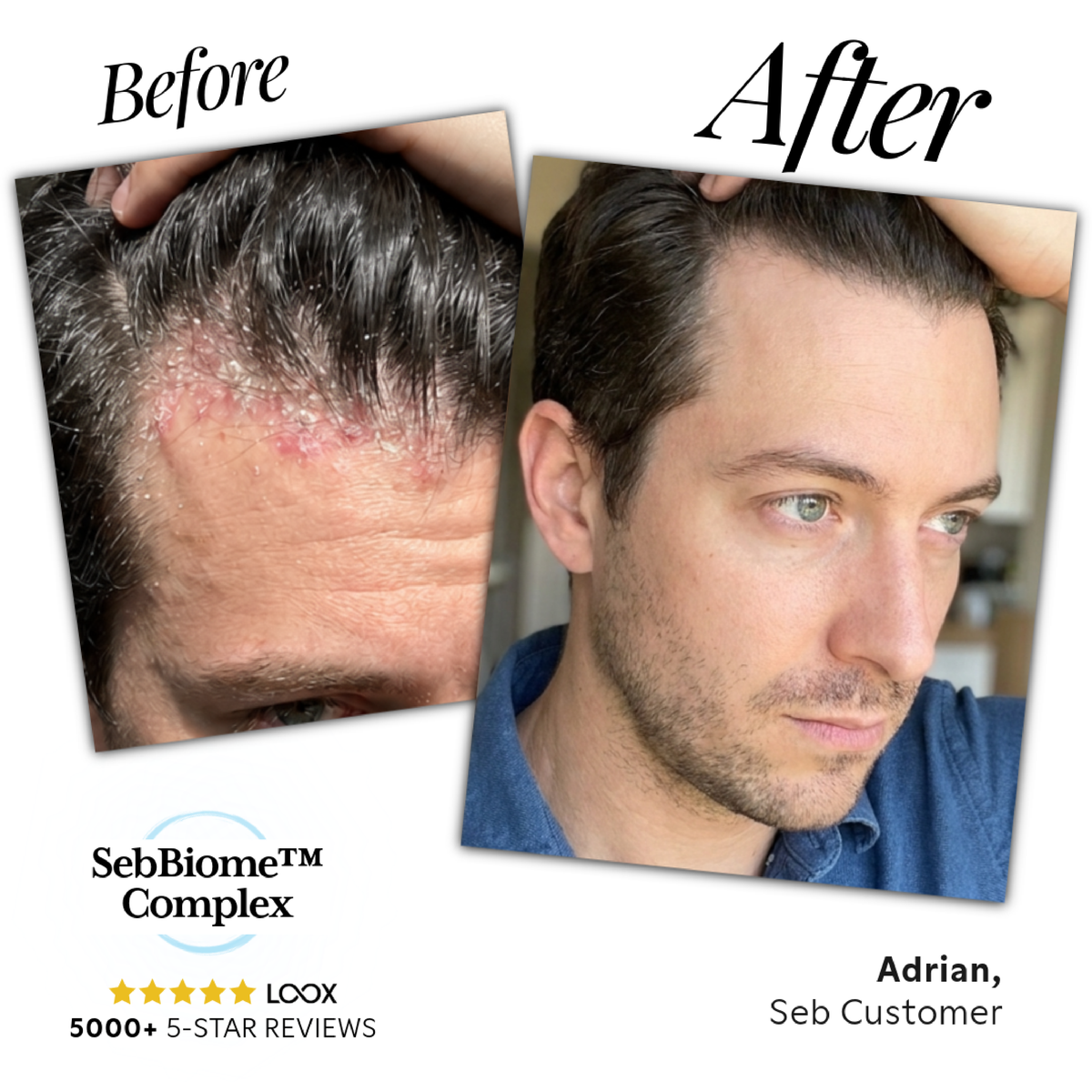
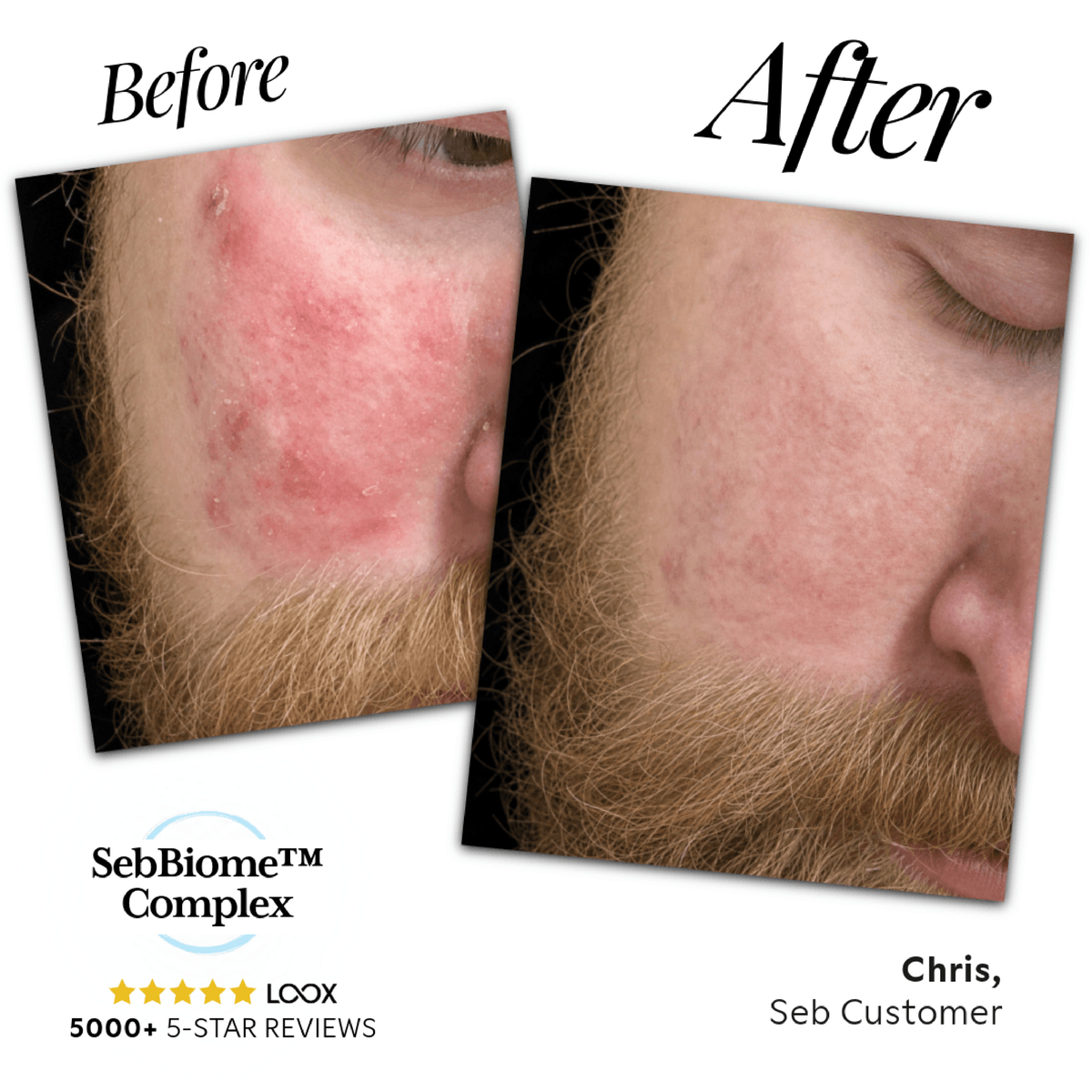
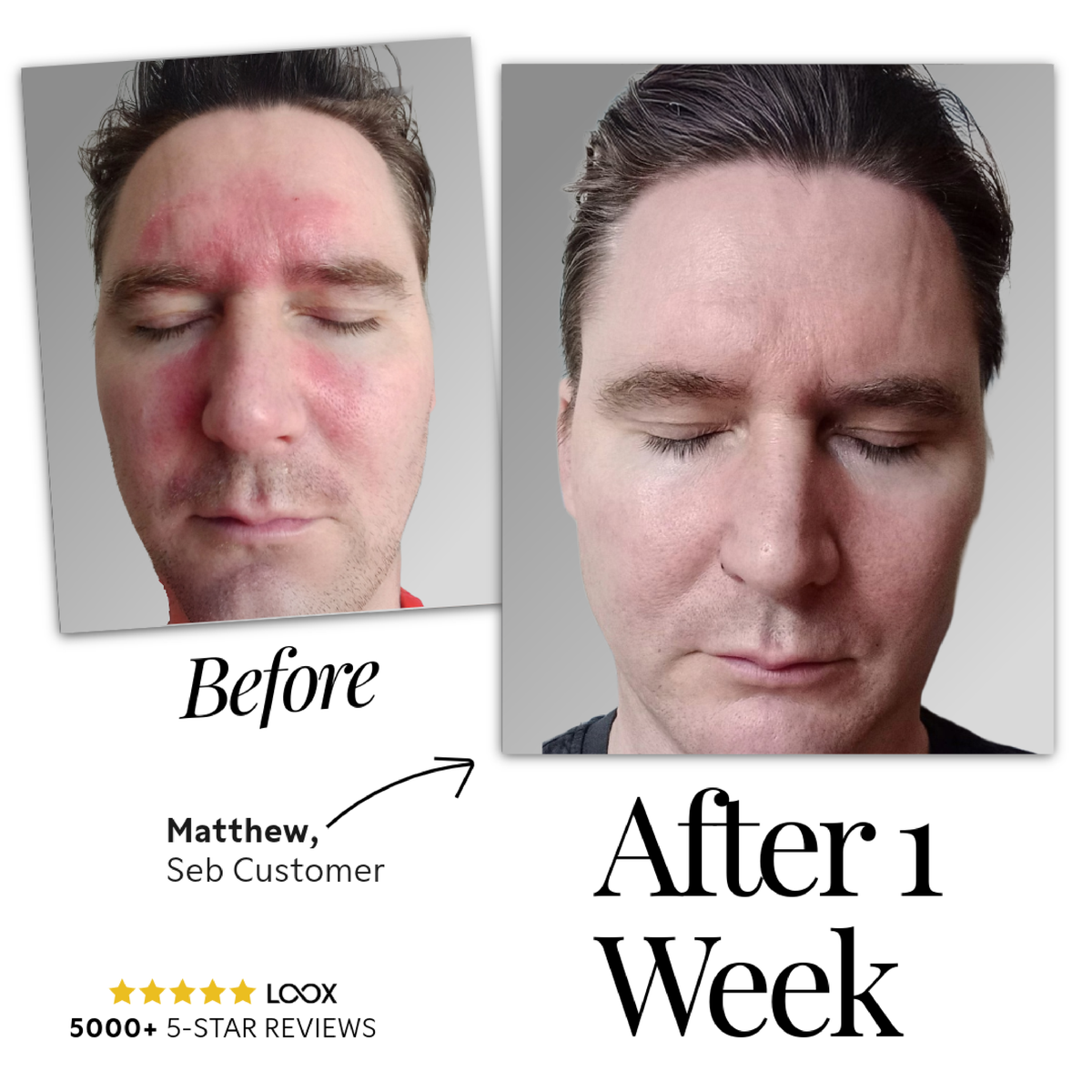
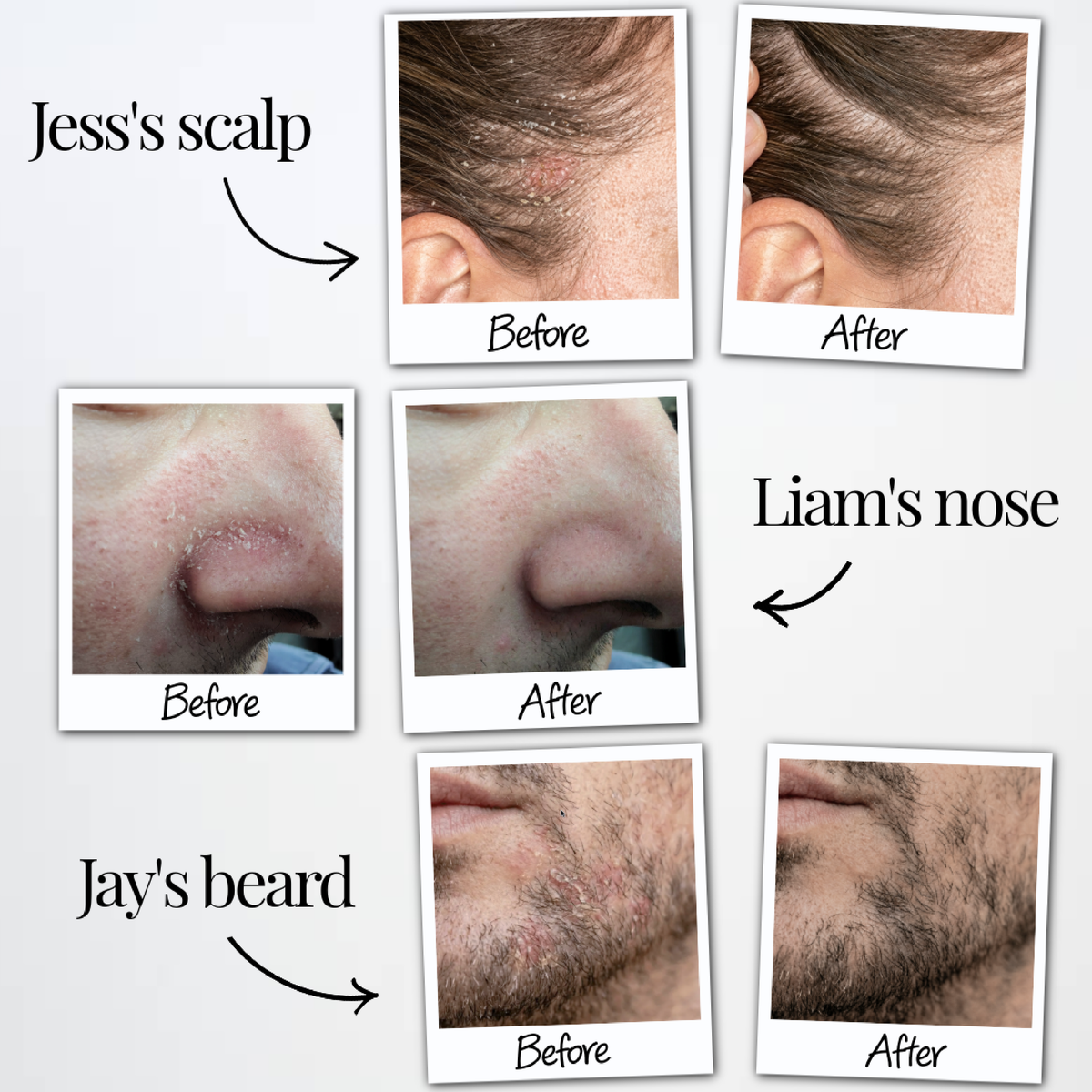
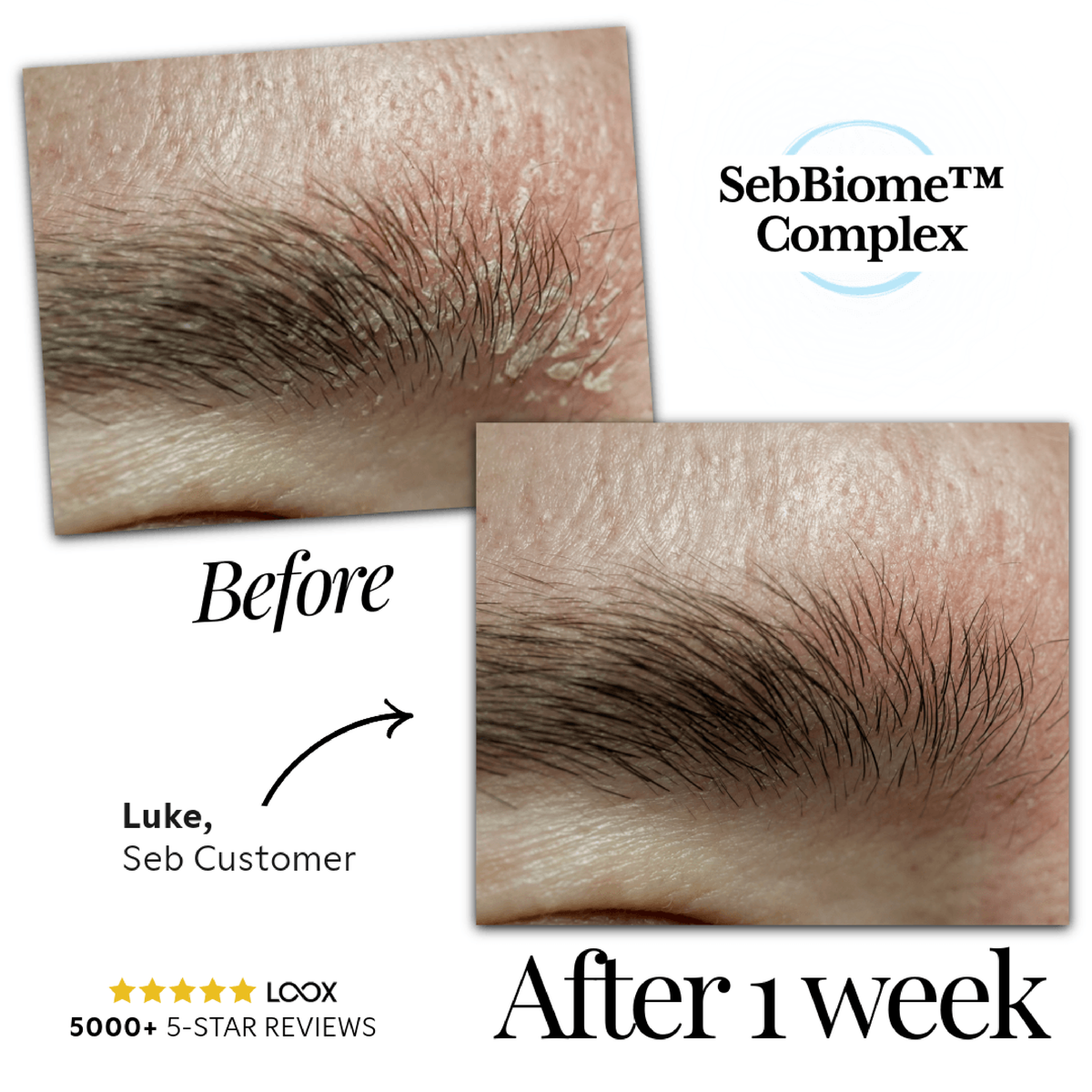
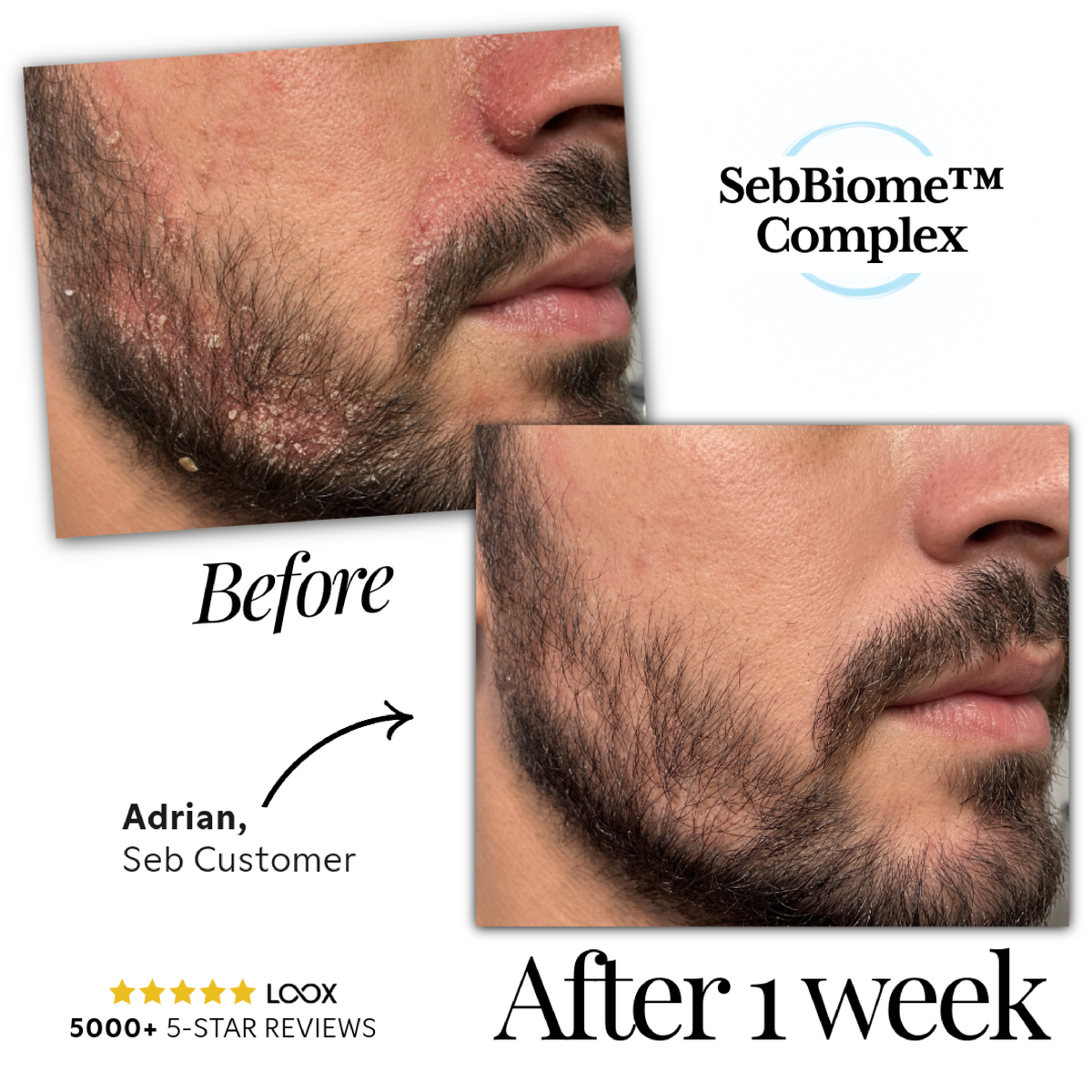
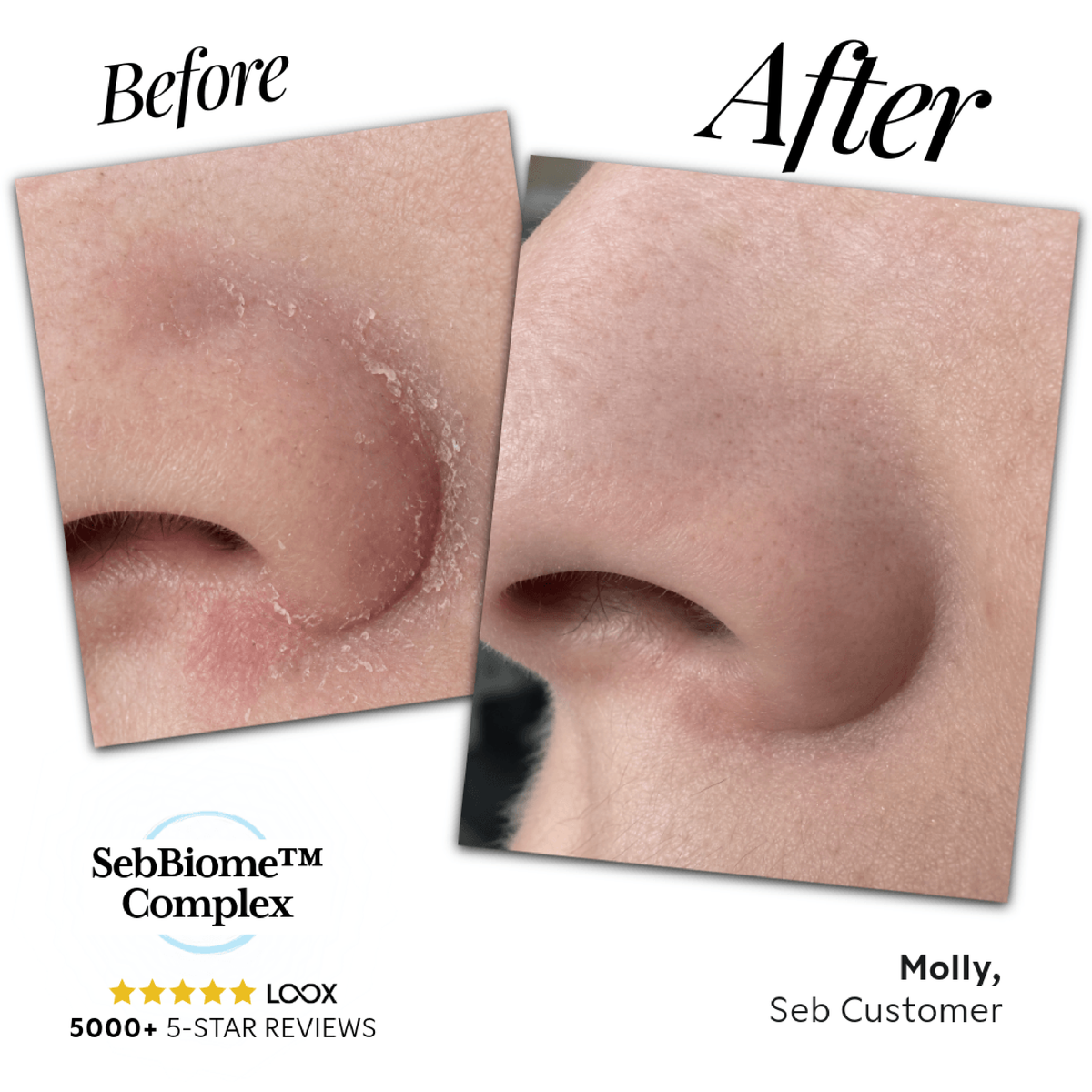
For some individuals, the main problem may be scalp scaling. For others, seborrheic dermatitis can also cause noticeable symptoms around the eyebrows, sides of the nose, ears or beard.
Why Are They So Easy to Confuse?
The main reason is simple: all three can cause flakes.
Flaking itself does not tell you exactly what is happening underneath the skin.
A person with dry skin may experience flakes because the skin has become dehydrated or irritated. Someone with dandruff may experience flakes because of the interaction between Malassezia, sebum and individual susceptibility. Someone with seborrheic dermatitis may experience similar scaling alongside inflammation.
Looking at the overall pattern is therefore more useful than focusing on flakes alone.
Where Does Malassezia Fit In?
Malassezia is naturally found on human skin, particularly in oily areas such as the scalp.
It is not automatically harmful and does not mean that someone has poor hygiene.
In people who are susceptible to dandruff or seborrheic dermatitis, however, Malassezia can interact with sebum and the skin in ways that contribute to irritation and inflammation.
This is one reason that treatments designed to control Malassezia can form part of a dandruff or seborrheic dermatitis management routine.
Could Your Dandruff Actually Be Seborrheic Dermatitis?
Recurring scalp flakes may be worth looking at more closely.
You may want to consider whether seborrheic dermatitis could be involved if your scalp problems are accompanied by:
- Persistent itching
- Redness
- Greasy scaling
- Frequent flare-ups
- Scaling around your eyebrows
- Flaking around your ears
- Scaling around your nose or beard
Seborrheic dermatitis is typically a recurring condition, so symptoms may improve for a period before returning.
Other Conditions Can Cause Scalp Flaking
It is also important to remember that not every itchy or flaky scalp is caused by dandruff or seborrheic dermatitis.
Psoriasis, eczema, contact dermatitis and certain fungal conditions can produce similar symptoms.
If your scalp symptoms are severe, persistent or not responding to your usual routine, getting an appropriate diagnosis can help rule out other causes.
The Importance of Understanding Your Scalp
Calling every flaky scalp “dry skin” can overlook the underlying reasons for recurring symptoms.
Dandruff, dry scalp and seborrheic dermatitis can overlap in appearance, but their underlying mechanisms are different.
Understanding the role of Malassezia, sebum, the skin barrier and inflammation provides a better picture of why some people experience persistent scalp problems.
If your scalp repeatedly becomes flaky, itchy or inflamed, it may be worth exploring whether seborrheic dermatitis is contributing to your symptoms.
For more information, read our complete guide to Seborrheic Dermatitis.